Product Inspection Finding: A Real Factory case study
This defect was found during our on-site inspection for custom-printed cooler bags at a factory in China. The case study behind this finding perfectly illustrates why an independent, pre-shipment inspection is essential—even when a factory boasts a “good reputation.”
When our inspector arrived, the factory owner proudly declared: “Our facility has been featured on national TV. Our quality is almost flawless.”
Our inspector welcomed the confidence, noting that a flawless production run would make everyone—the client, the agency, and the factory—happy. He explained that for cooler bags with gradient color printing, the most common issues are usually untrimmed internal threads and pixelation at the color transition areas. If those two elements hold up, the batch is typically in great shape. The owner confidently promised there would be no loose threads and that the printing was pristine. With those assurances, they moved into the workshop to begin the inspection.
They didn’t have to wait long. Within seconds of unpacking the first few samples, the inspector pointed directly to the color transition area where the gradient shifted from dark to light. The printing was coarse, marred by heavy graininess and harsh, choppy tonal breaks.
The Reaction: The factory owner was stunned. He gave our inspector a thumbs-up and admitted: “Professional! Truly professional!”
This case study happens every day in our work. It proves that experience and expertise are what you’re really paying for when you hire a product inspection service in China.
Defect Analysis
| Finding Analysis | Details |
|---|---|
| Product | Custom-printed cooler bags |
| Defect | Rough printing on color transition areas (gradient breaks) |
| Root Cause | Low-precision screen mesh causing insufficient dot density in the gradient. The color gradation breaks harshly instead of transitioning smoothly. |
| Corrective Action | Inspect the first print batches immediately. Early detection is the only way to prevent mass production of defective units. Use high-precision screen mesh. |
| Frequency | ⭐⭐⭐⭐☆ |
| Rework Difficulty | ⭐⭐⭐⭐⭐ |
| Rework Collateral Risk | ⭐⭐⭐⭐⭐ |
What Is “Rough Printing on Color Transition” and Why Does It Matter?
Color gradient printing (also called “fade” or “ombre” printing) requires precise control of ink dot density. The image transitions from 100% ink coverage in the dark area to 0% (or low percentage) in the light area.
When the printing precision is insufficient, the transition breaks down:
- You see visible dots or graininess in the mid-tone range
- The smooth fade becomes a harsh step change, like a staircase instead of a slope
- The overall print looks cheap, pixelated, and unprofessional
For consumer products like cooler bags, the print is often the primary selling point. A rough, grainy gradient makes the product look counterfeit, low-end, and damages brand perception. In our inspection, the defect was visible to the naked eye from a normal viewing distance — which means the end customer will notice it.
Root Cause Analysis: Why Did This Happen?
The defect traced directly to the printing screen quality:
1. Low-Precision Screen Mesh
Gradient printing requires high mesh counts (e.g., 300-400 threads per inch) to hold fine dot structures. The factory used a low-precision screen, which cannot produce enough dot density to create a smooth transition. As a result, the mid-tone dots “break” — they become too coarse and visible.
2. Lack of First-Article Inspection
This is the critical management failure. The factory did not inspect the first print samples before running the full batch. If they had checked the first 5-10 pieces, they would have seen the defect immediately and could have stopped production to fix the screen.
3. Overconfidence in “Reputation”
The factory owner relied on his TV appearance as proof of quality. But reputation does not replace real-time quality control. Without independent inspection, even a “famous” factory can ship defective products.
Why a Professional Product Inspection Service in China Matters
This case highlights three critical reasons to hire an independent product inspection service in China:
| Reason | What Happened Here |
|---|---|
| 1. Expertise in Specific Defect Types | Our inspector knew exactly which two defects to look for on gradient-printed bags. The factory owner didn’t even know the risk existed. |
| 2. Fresh Eyes & Objectivity | The owner “couldn’t see” the defect because he was proud of his factory. Our inspector saw it immediately because he wasn’t biased. |
| 3. Early Intervention Saves Money | Catching the defect during first-article inspection would have prevented the entire defective batch. The cost of inspection is tiny compared to rework or scrap. |
How to Fix It: Practical Solutions
Immediate Corrective Action (For This Batch)
- Stop production immediately — Do not continue printing until the screen issue is resolved.
- Switch to a high-precision screen — Use 350+ mesh count for gradient images.
- Rework defective bags — If possible, the print can be re-done on new material (but rework is expensive and often impossible).
Long-Term Preventive Measures
| Measure | Description |
|---|---|
| Pre-Production Sampling | Always inspect the first 10 pieces (or “first article”) before mass production starts. This is the single most effective prevention step. |
| Screen Quality Standards | Specify minimum mesh count for gradient prints in your supplier agreement. |
| Supplier Training | Educate your factory on what an acceptable gradient looks like. Provide visual pass/fail samples. |
| In-Process Inspection | Have an inspector check samples periodically during the print run, not just at the end. |
Inspection Photos
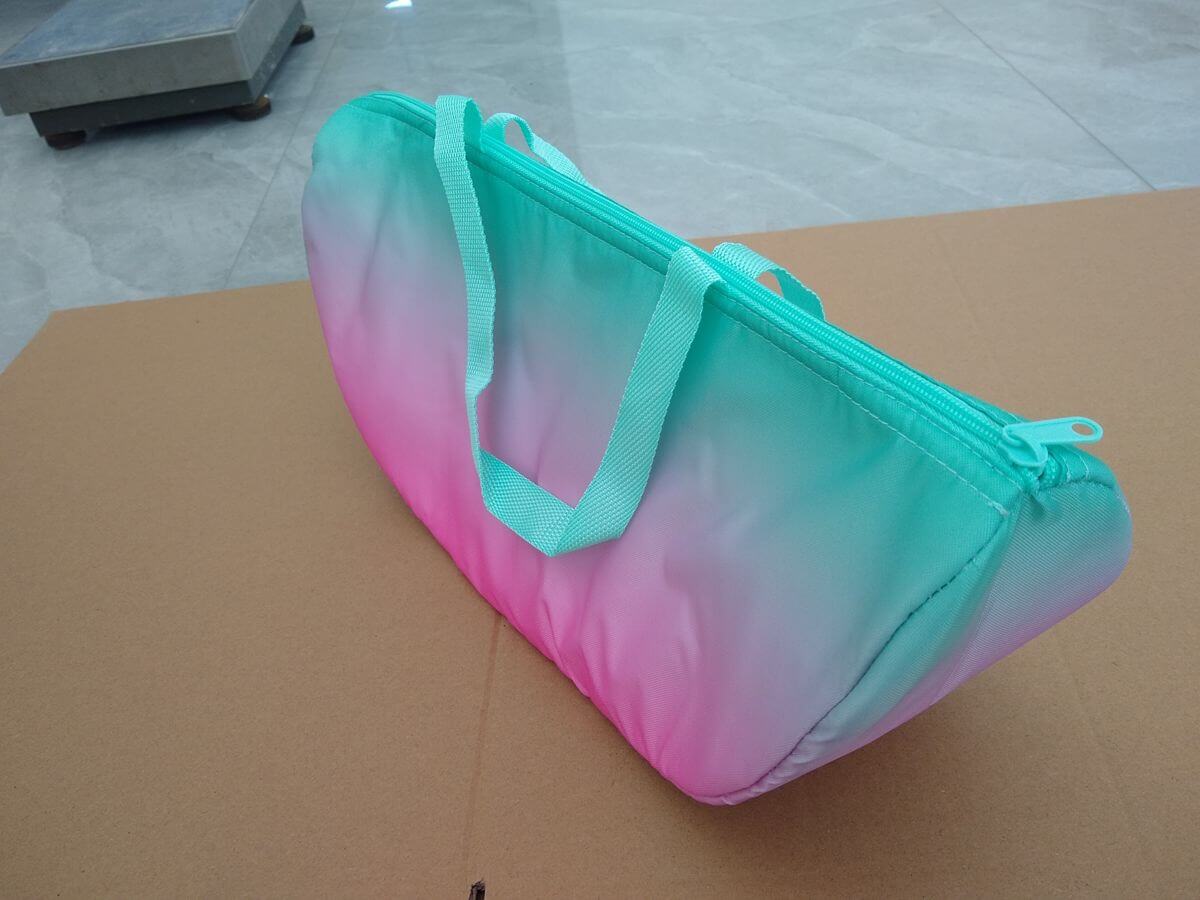
Overall view of the cooler bag. The gradient print looks fine at first glance, but close inspection reveals problems.

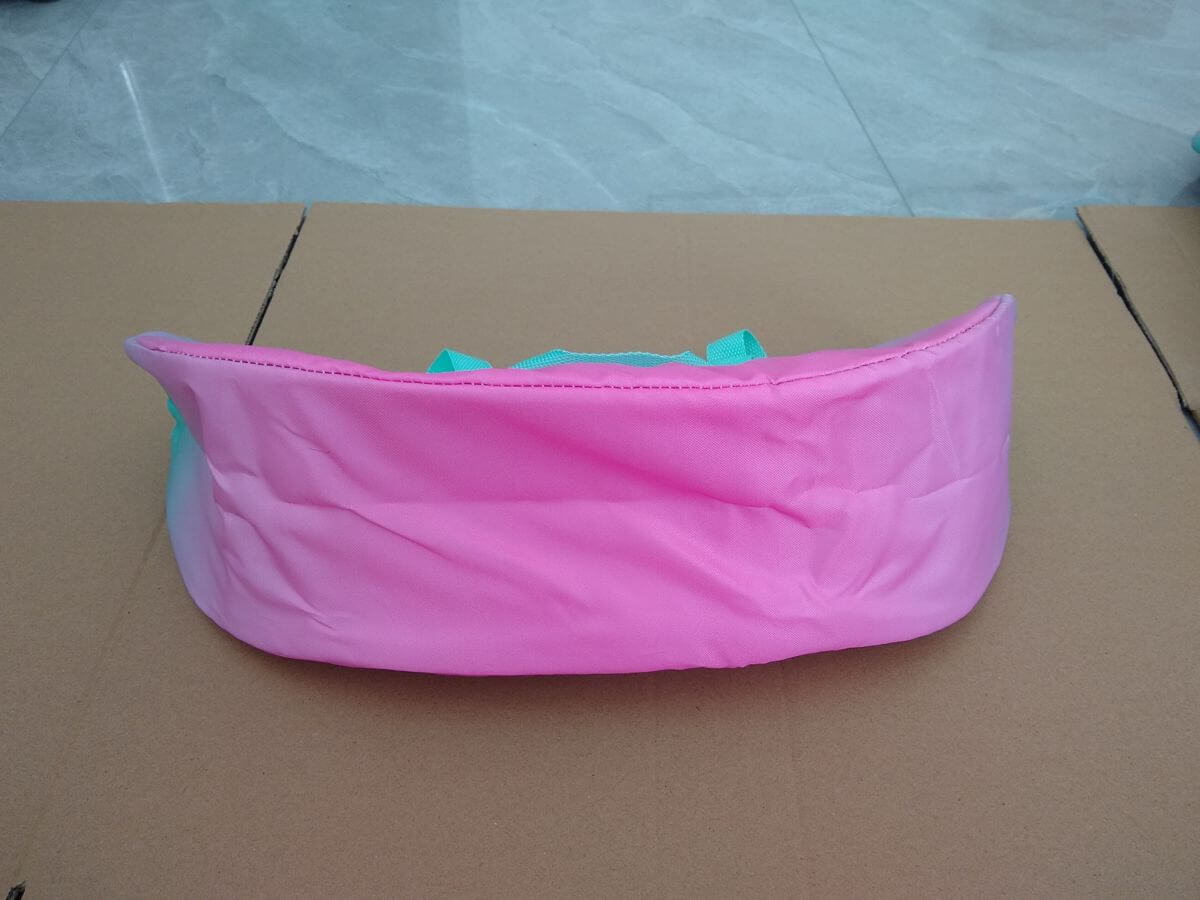
Overall view of the cooler bag - bottom.
Overall view of the cooler bag.*
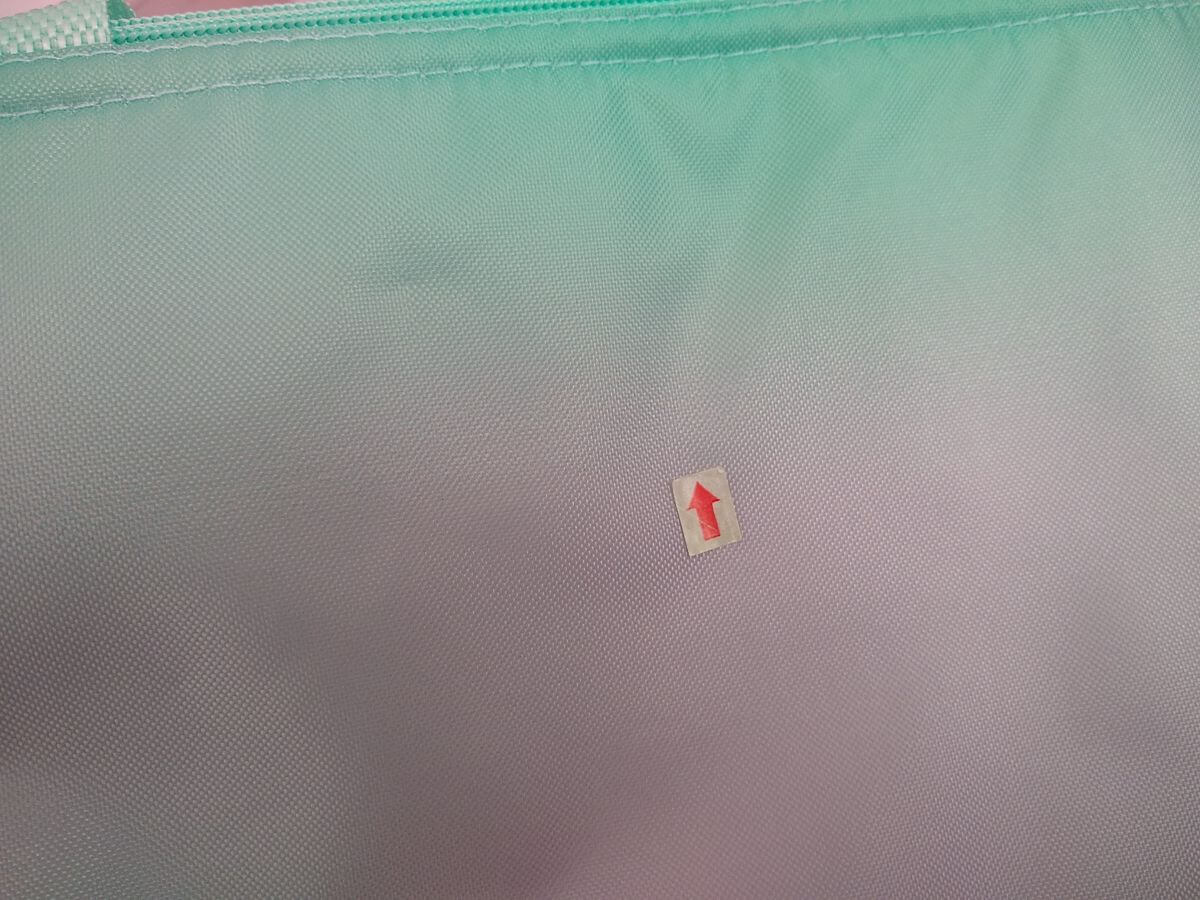
The transition from mid-tone to light tone is abrupt and pixelated. This is the “step change” that makes the print look cheap.
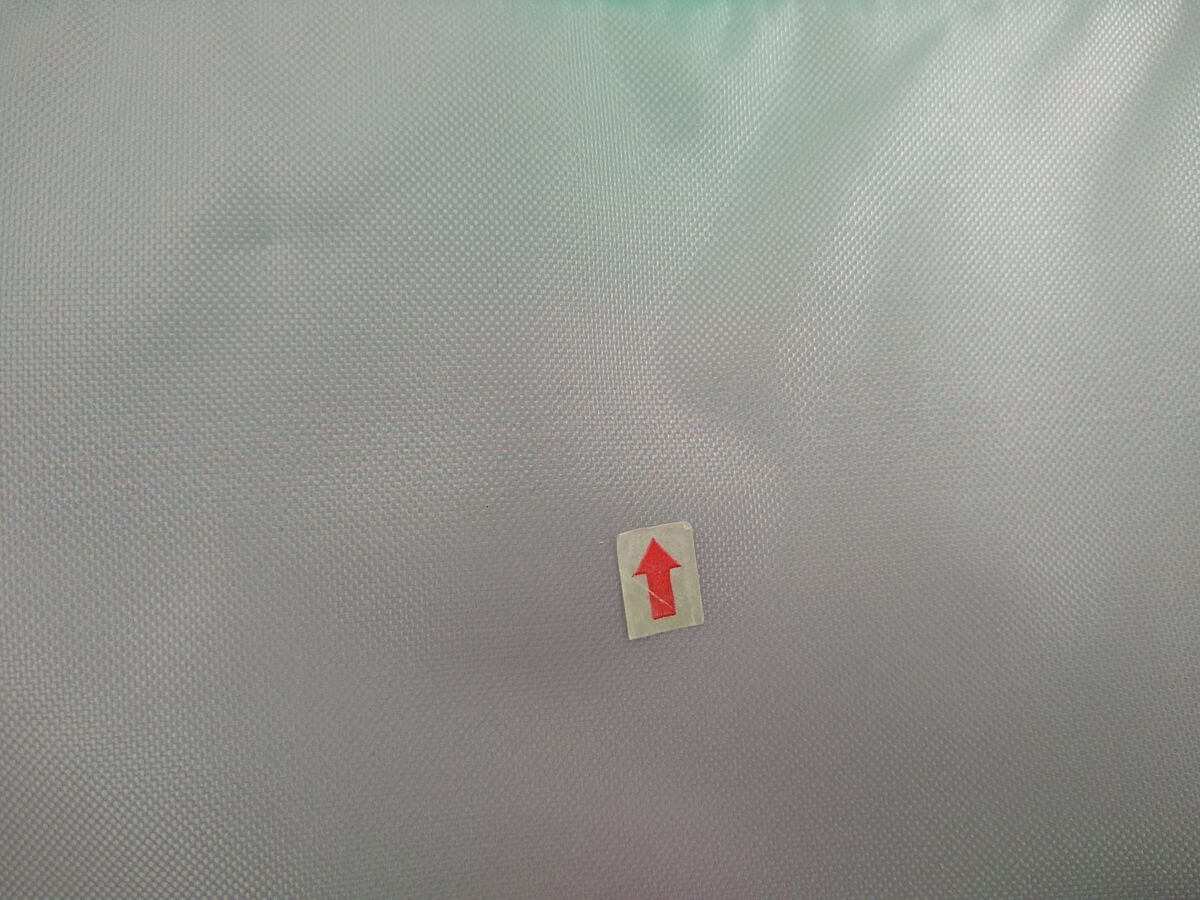
Side-by-side comparison: (Left) Acceptable smooth gradient, (Right) Rough gradient with visible dots and breaks.
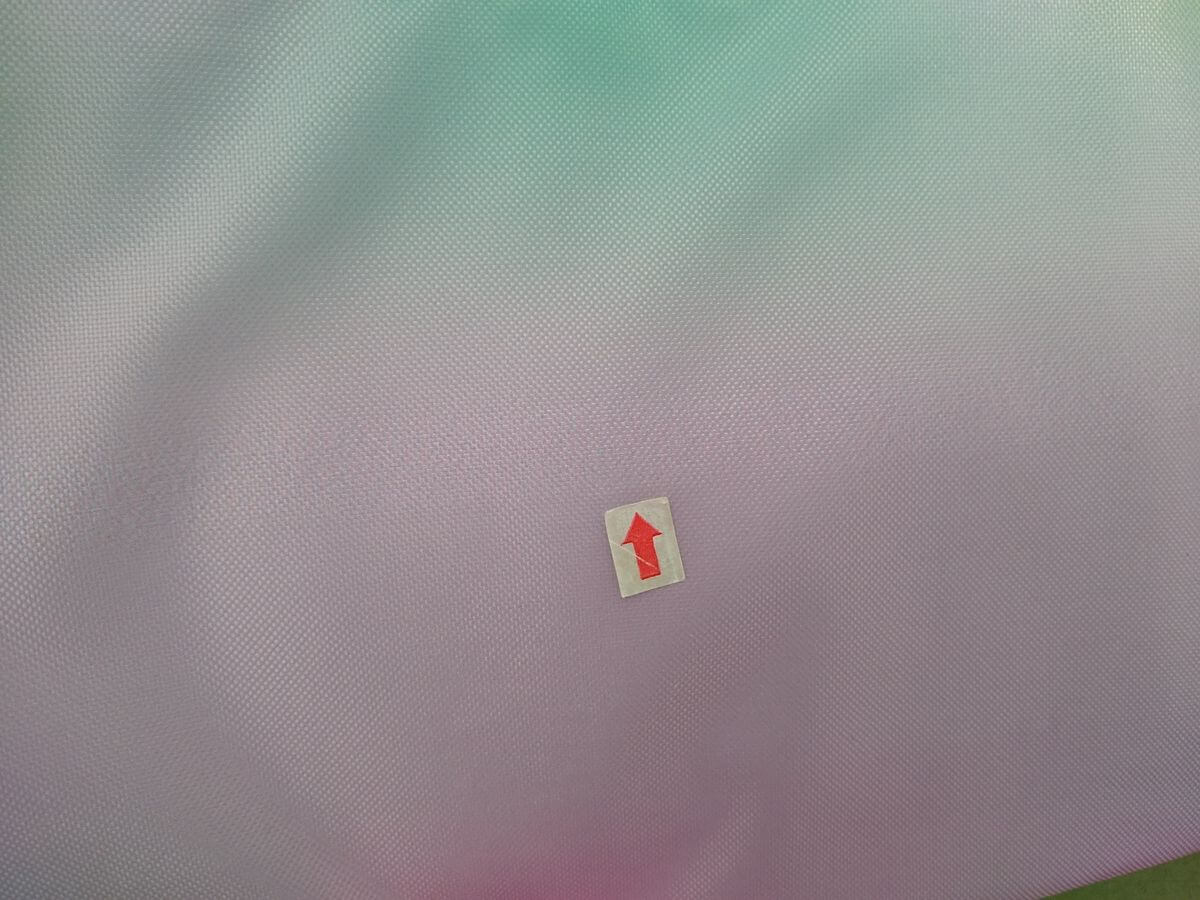
The defect as it appears on the actual product. Even from a normal distance, the graininess is noticeable.
Rework Effort & Risk Assessment
| Evaluation Metric | Rating | What It Means |
|---|---|---|
| Frequency | ⭐⭐⭐☆☆ | Moderate. Gradient printing defects are common when factories use low-precision screens, but they are 100% preventable with correct setup. |
| Rework Difficulty | ⭐⭐⭐⭐⭐ | Extremely Difficult. Rework requires stripping the print and re-printing on new material. In most cases, the defective batch cannot be salvaged and must be scrapped. |
| Rework Collateral Risk | ⭐⭐⭐⭐⭐ | High. Attempting to re-print over the existing image often results in smudging or registration errors. The scrap rate is very high. |
💡 QC Insight for Buyers
For procurement professionals and brand owners sourcing printed cooler bags or similar products:
Never trust “reputation” alone. Even a factory that “went on TV” can ship defective products. Independent inspection is your only guarantee of quality.
Gradient printing is a high-risk process. The difference between a “good” gradient and a “bad” one is extremely subtle to the untrained eye. You need an inspector who knows exactly what to look for.
Inspect the first articles. Do not allow mass production to start until the first-print samples are approved by a qualified inspector. This one step prevents 90% of gradient-related defects.
Define “acceptable” in your contract. Provide your supplier with visual samples (e.g., “this is what a smooth gradient looks like, this is what a rough one looks like”). Do not leave it to subjective judgment.
Budget for inspection. A $168/man-day inspection fee is a tiny fraction of the cost of rework, scrap, delayed shipment, or customer returns.
The Bottom Line: Why You Need Product Inspection Service in China
This real case study shows that quality is not about reputation — it’s about verification. No matter how good a factory claims to be, the only way to know your product meets your standards is to have an independent expert check it on-site.
What a professional product inspection service in China gives you:
- Expertise to spot defects you don’t even know exist
- Objectivity that factory staff cannot provide
- Early detection that saves your order from disaster
At CNS Quality , our inspectors have 15+ years of experience in printing, packaging, and consumer goods. We know the common failure modes — and we know how to catch them before they cost you money.
🔍 Looking for reliable product inspection service in China?
With 17 years of on-site QC experience, we can help you catch these issues before they ship at $168/man-day.
Learn more →