Field Notes: The Conflict Between Product Quality and Packaging Quality
This on-site execution was commissioned by a UK-based premium toy importer evaluating a high-volume putty bottle set order.
Upon arrival at the facility, the quality inspector was escorted to the owner’s executive office. The factory owner, showcasing a strong technical background, spent the first ten minutes explaining that his facility produces high-value toys for top-tier global brands. He emphasized that their internal product engineering, tactile finishing, and compound material quality were industry-leading, suggesting the inspection would be a mere formality.
However, once standard batch sampling commenced on the packaging line, our technician identified a systematic issue that the factory team had completely overlooked. This case perfectly illustrates a common pitfall in manufacturing: focusing entirely on the core product while ignoring the engineering tolerances of accessories and secondary packaging materials.
Technical Inspection Report
1. Defect Analysis
| Finding Analysis | Details |
|---|---|
| Product | Plastic jar / container for toy putty and fidget compounds |
| Defect | Label wrinkling / surface blistering on the bottle surface |
| Root Cause | The bottle wall is not perfectly perpendicular — it has a slight dimensional arc or barrel silhouette. The flat label cannot conform to the curvature, creating compressive structural stress that causes buckling. The defect worsens under high-temperature conditions. |
| Corrective Action | 1) Use die-cut round labels applied to the lid top or bottle bottom; 2) Use folding labels (3 rounds folded into 1) when content is extensive. |
| Frequency | ⭐⭐⭐⭐☆ |
| Rework Difficulty | ⭐⭐⭐⭐☆ |
| Rework Collateral Risk | ⭐⭐☆☆☆ |
2. Technical Risk Assessment
| Engineering Metric | Rating | Technical Implications |
|---|---|---|
| Frequency | ⭐⭐⭐⭐☆ | High. Frequently occurs when flat, linear adhesive labels are applied to injection-molded bottles with variable draft angles. |
| Rework Difficulty | ⭐⭐⭐⭐☆ | High. Frequently occurs when flat, linear adhesive labels are applied to injection-molded bottles with variable draft angles. |
| Collateral Risk | ⭐⭐☆☆☆ | Moderate. Minimal risk to the inner putty material, but presents reputational risk if labels fail on retail shelves |
Root Cause & Engineering Solutions
Geometric Analysis of the Wrinkling
A standard adhesive label is manufactured as a perfectly flat, two-dimensional plane designed for cylindrical surfaces with zero vertical curvature (perfectly perpendicular walls).
The Cause: Physical measurement of these specific plastic containers revealed that the bottle walls are not perfectly perpendicular — they possess a slight dimensional arc or barrel silhouette. Forcing a flat label onto a complex three-dimensional curvature inevitably creates compressive structural stress, forcing the paper or plastic film to buckle and ripple.
Why it worsens in high temperatures: Different materials expand at different rates when heated. The label material and the bottle material have different coefficients of thermal expansion. Under high-temperature conditions (such as ocean transit inside a standard container), the bottle and the label expand at different rates — and because the label is already under stress from the curved surface, the wrinkle becomes more pronounced. Trapped air and adhesive compounds also expand, making the label wrinkling defect progressively more severe.
The Solution:
Redesign the Label Placement — Shift the primary branding and tracking information to a die-cut circular label applied flat onto the container lid top or the recessed bottom base.
Utilize Booklet / Folding Labels — If regulatory compliance requires extensive safety text and warning logs, implement a multi-layer folding label (3 rounds folded into 1) to reduce the horizontal footprint on the curved bottle wall.
Long-Term Preventive Measures
| Measure | Description | Effectiveness |
|---|---|---|
| Die-Cut Circular Labels | Apply round labels to the lid top or bottle bottom — these surfaces are flatter and less prone to wrinkling. | ⭐⭐⭐⭐⭐ |
| Flexible Label Materials | Use thin, flexible film materials (e.g., PE film) instead of paper labels on curved surfaces. | ⭐⭐⭐⭐⭐ |
| Folding Labels | For labels with extensive content, use folding labels to reduce surface area on the curved wall. | ⭐⭐⭐⭐ |
| Pre-Production Sample Test | Always test label application on actual product samples before mass production — especially for curved or non-standard surfaces. | ⭐⭐⭐⭐⭐ |
| Environmental Control | Store labels and products in a controlled environment. Humidity changes can cause paper labels to expand and wrinkle. | ⭐⭐⭐⭐ |
On-Site Evidence Gallery
The unedited technical snapshots below document the progression of the label ripples observed across different random samples from the production lot:
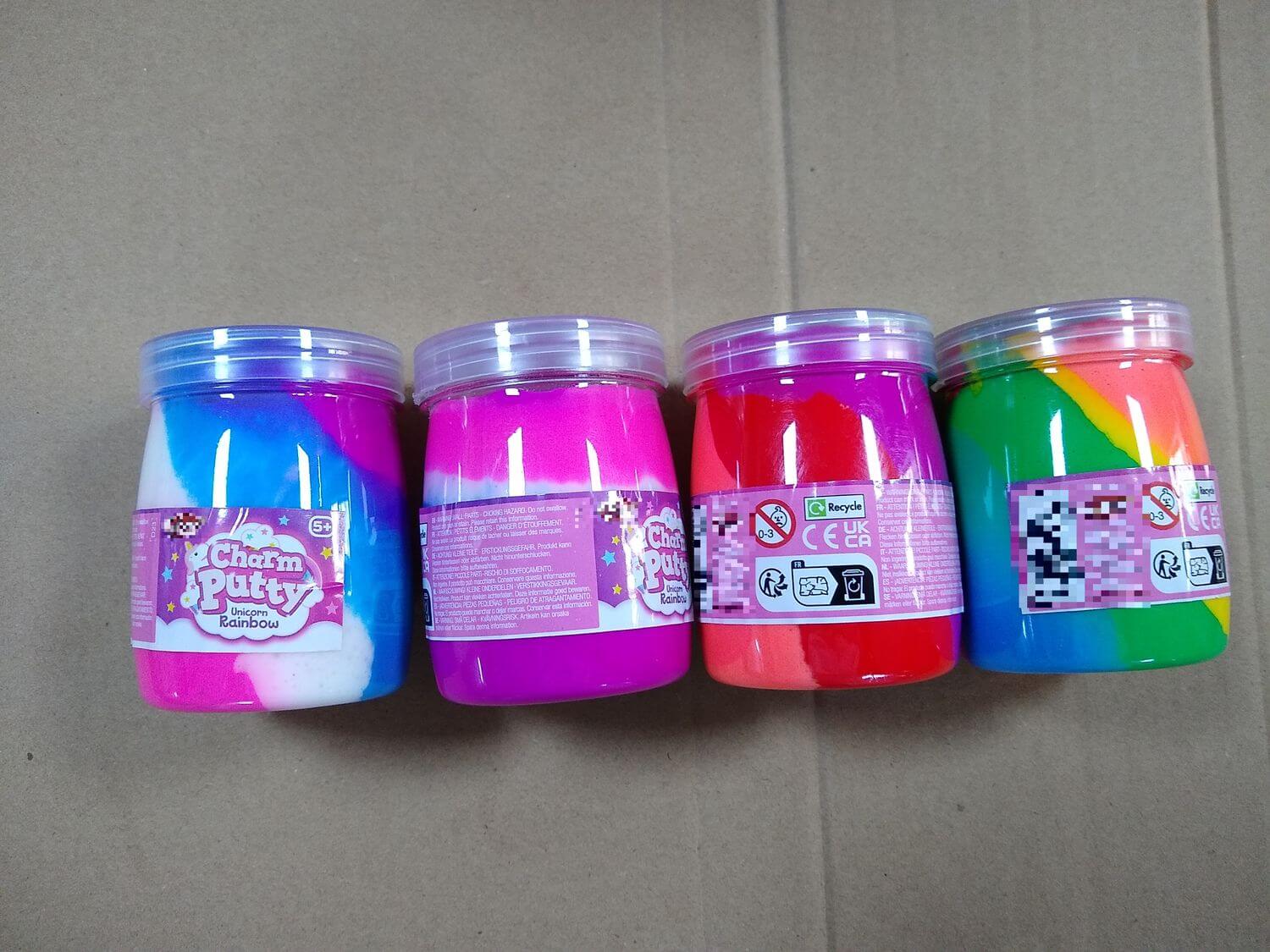
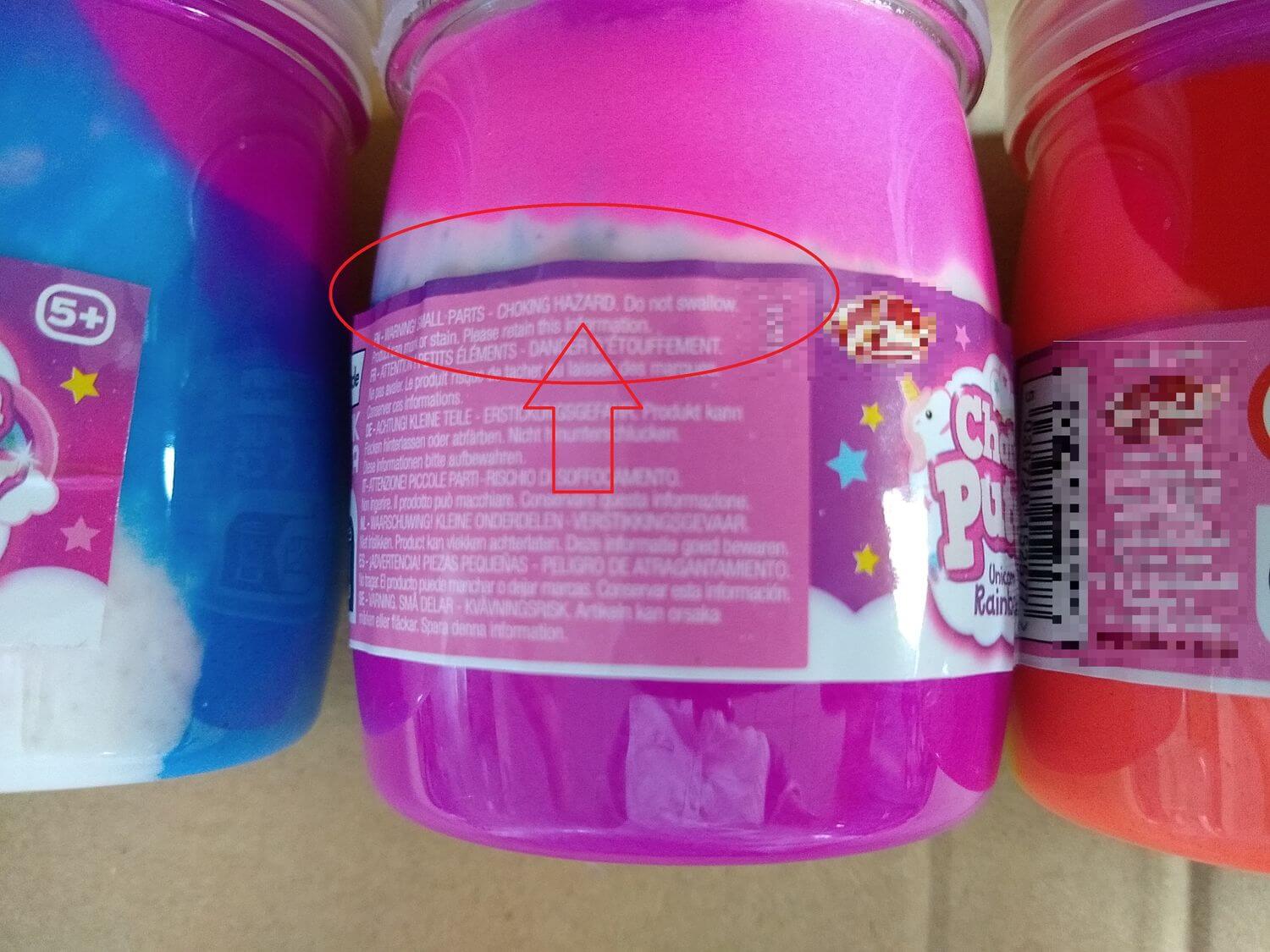
Overall view of the putty bottle set. From a distance, the labels appear fine — but close inspection reveals the wrinkling.
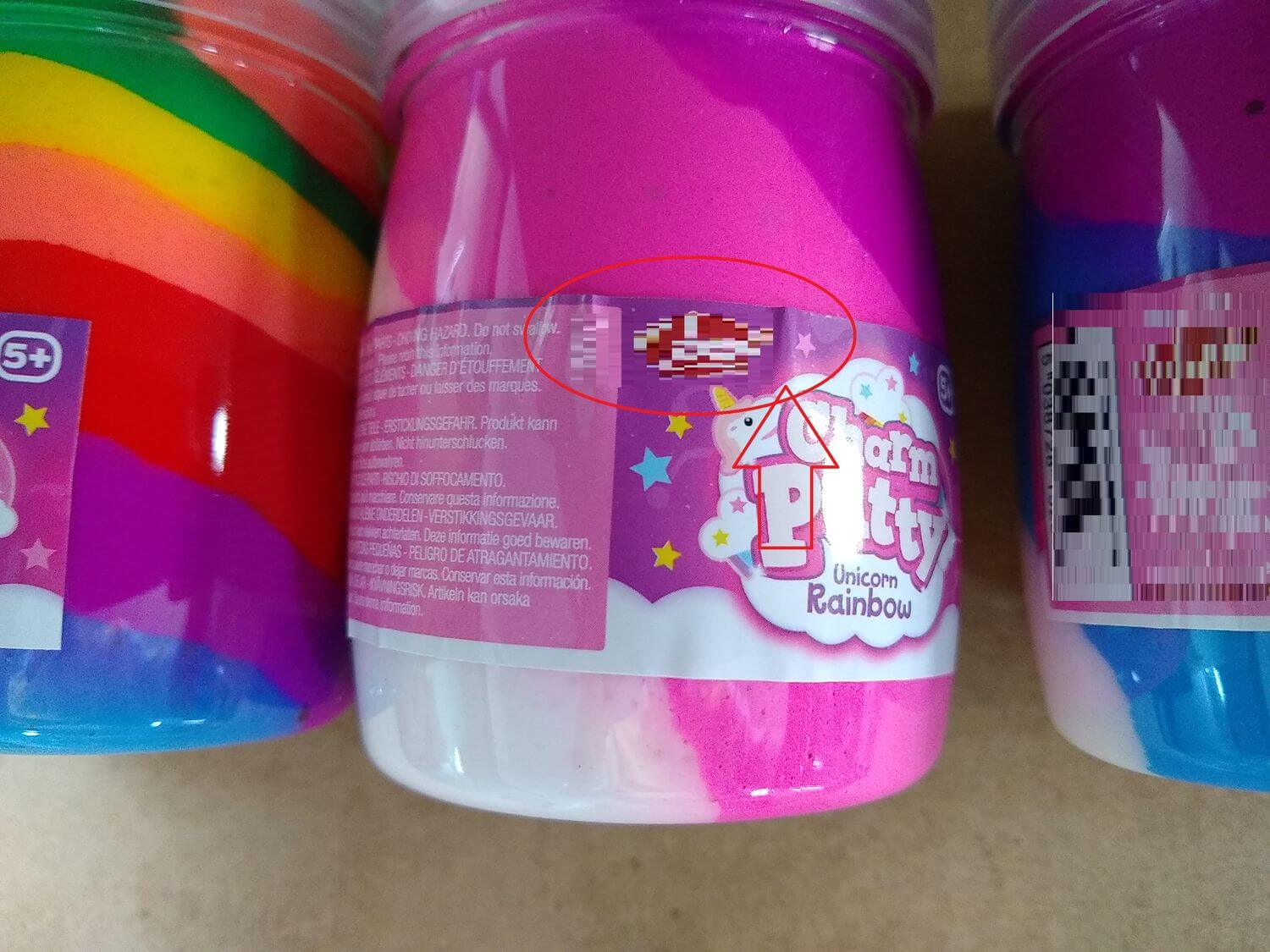
Close-up of the label wrinkling on the curved bottle surface. The flat label cannot fully conform to the arc.
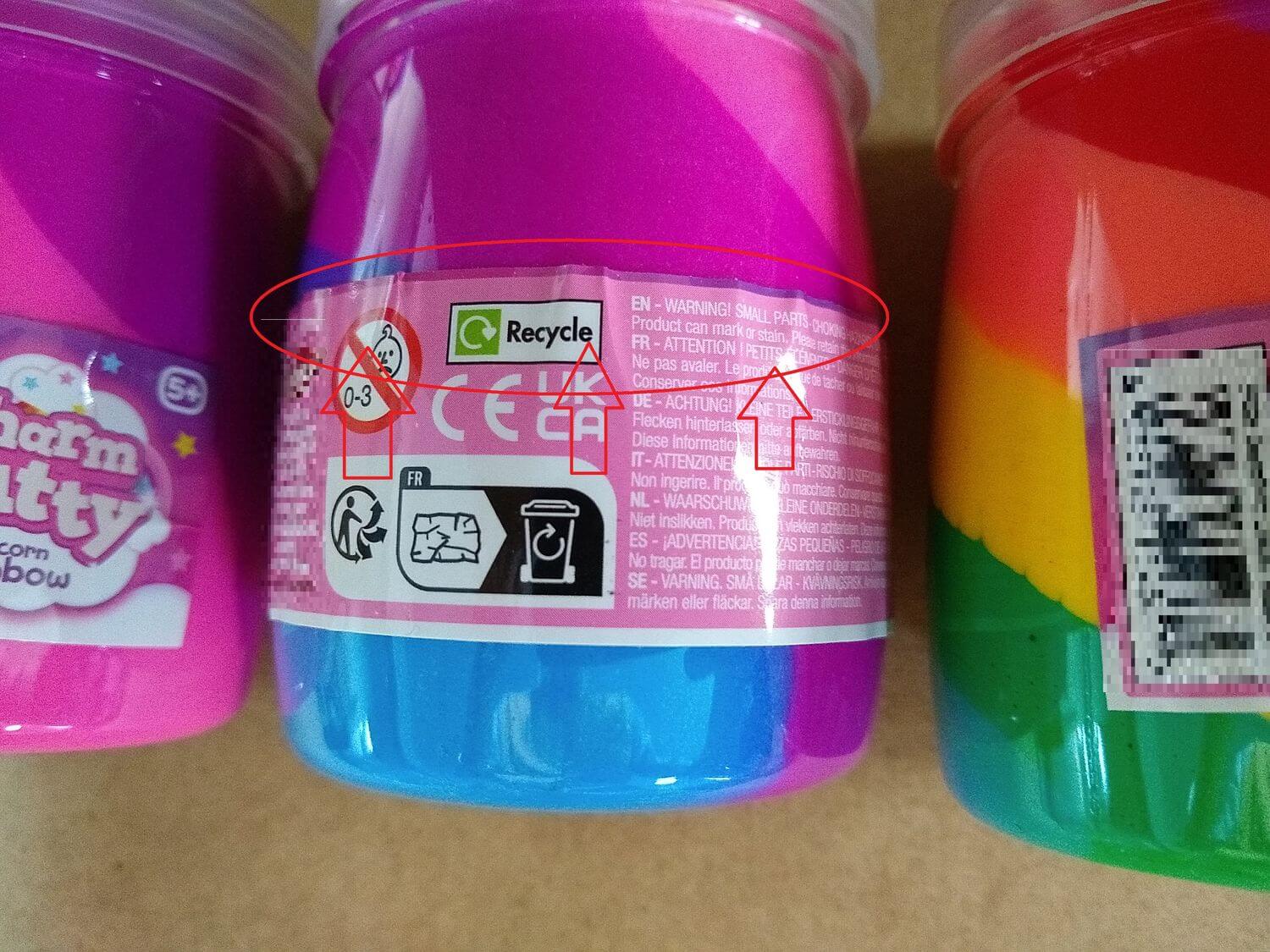
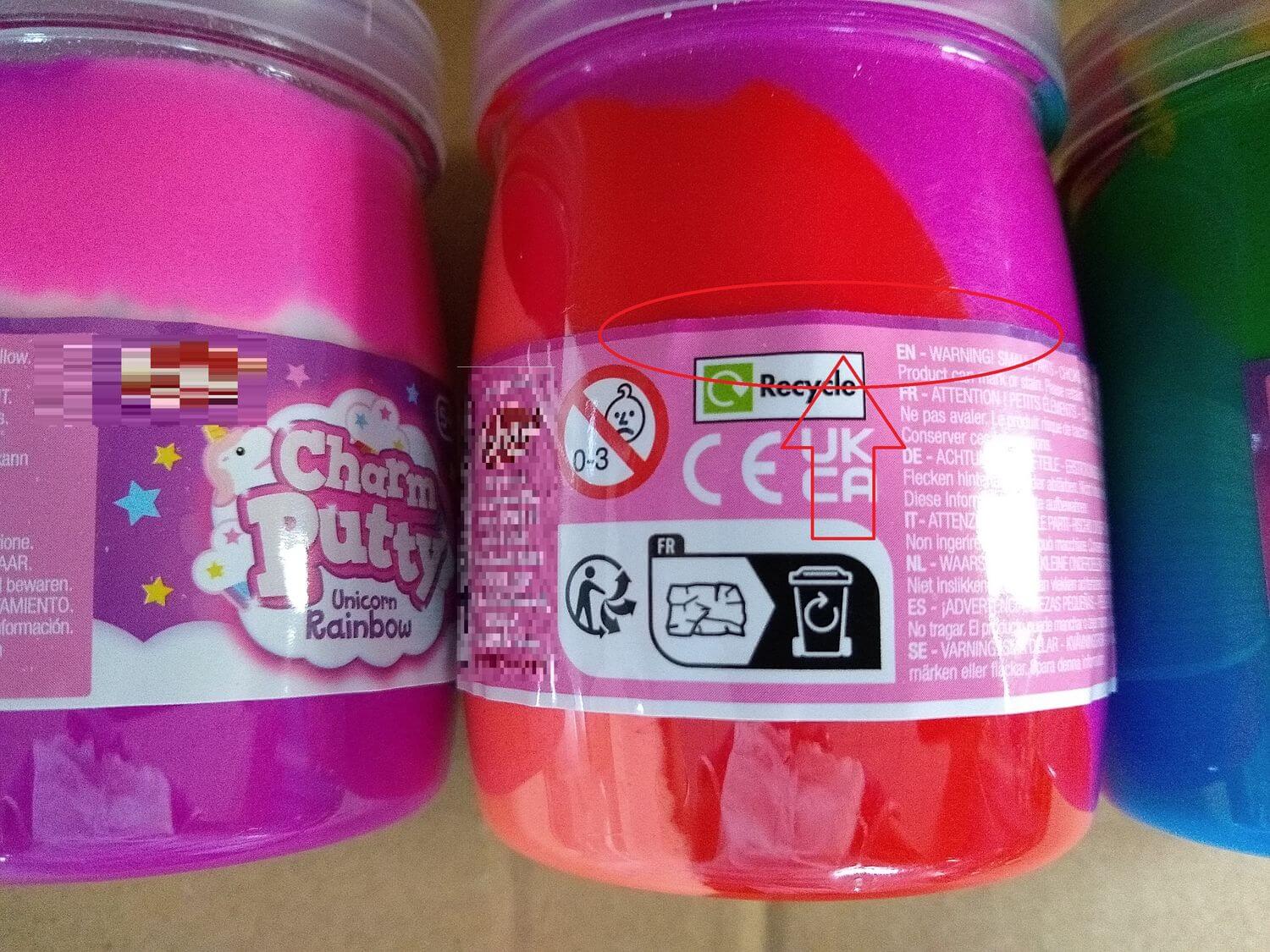
Another angle showing the wrinkle pattern — the label buckles under stress from the curved surface.
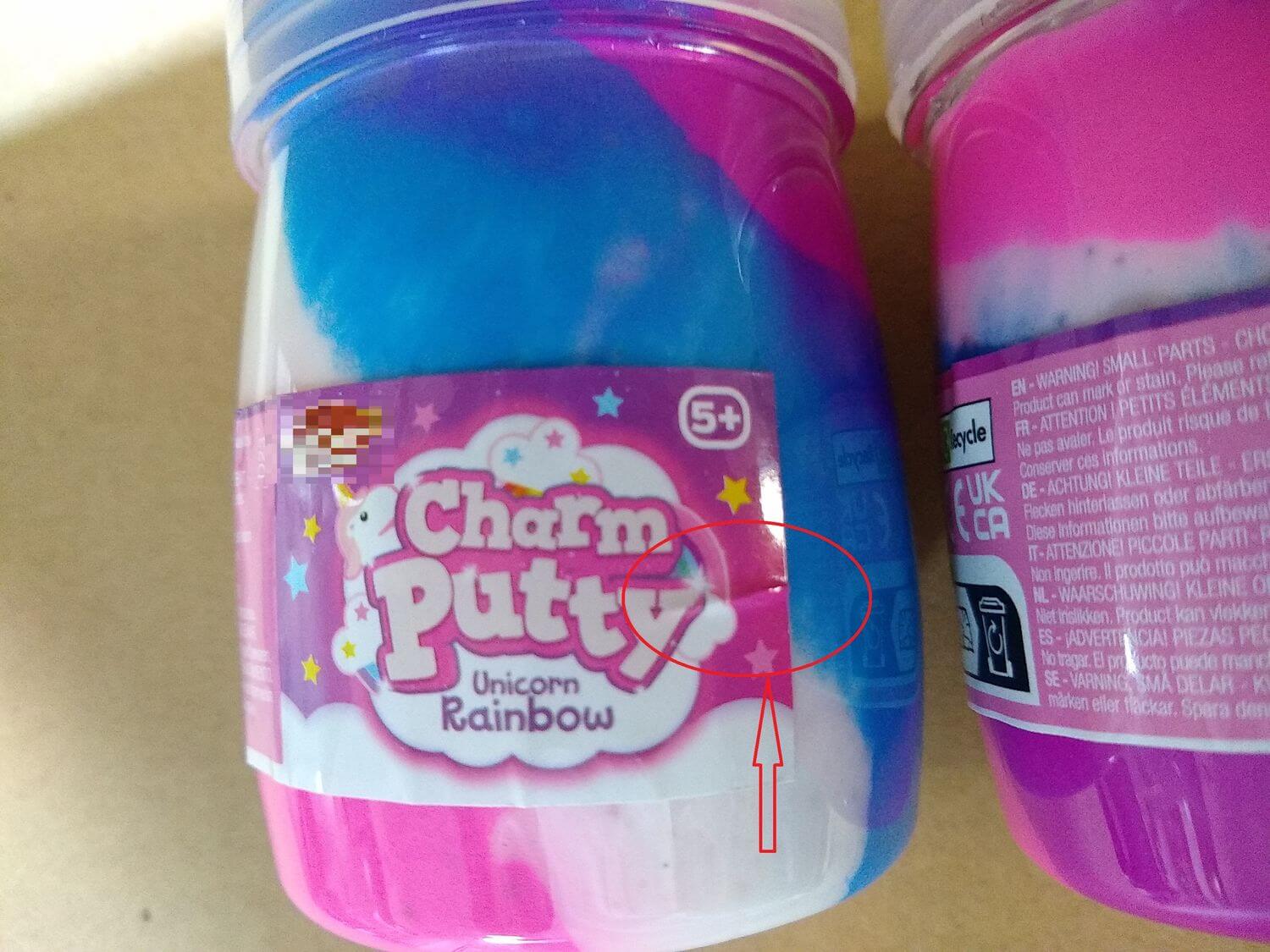
The wrinkle as it appears on the product. Visible to the end user and affects perceived quality.
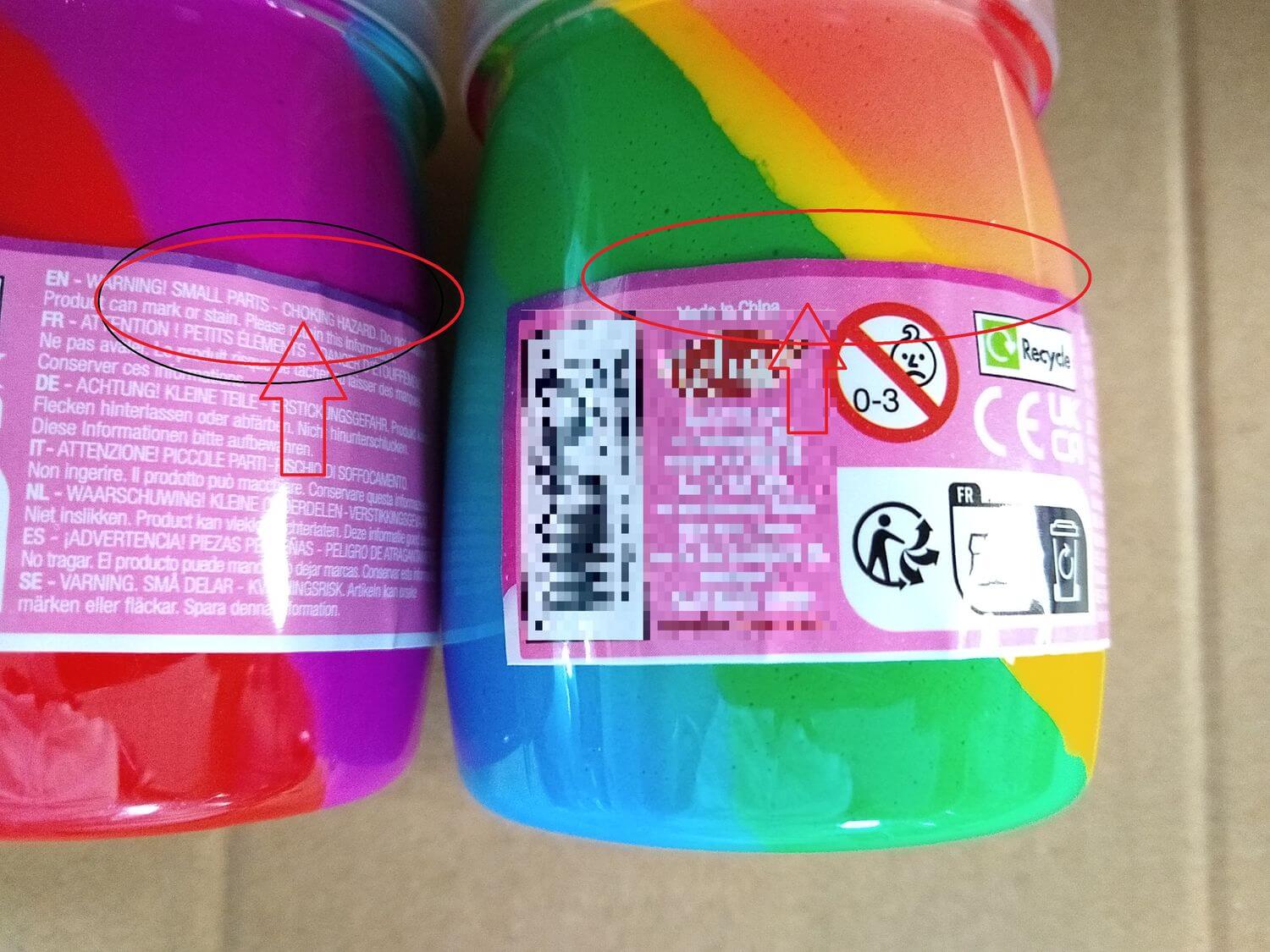
Multiple wrinkles on a single label, showing how the defect spreads across the curved surface.
Close-up of the wrinkle — the label material is stressed and cannot lie flat.
Side-by-side comparison: (Left) Defective label with wrinkling, (Right) Acceptable label applied smoothly.
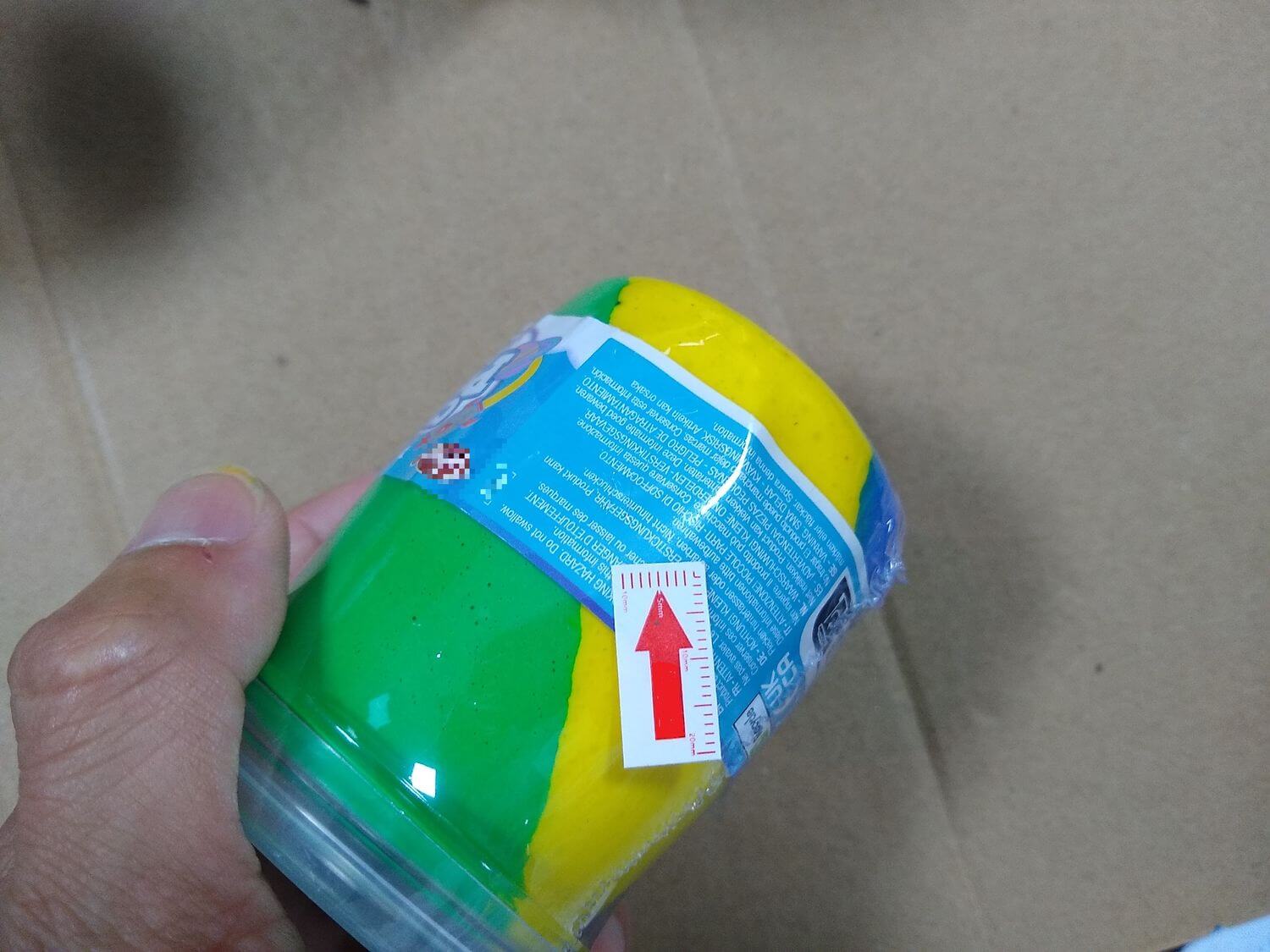
Detail showing the curved bottle surface — the root cause of the wrinkling defect.
💡 QC Insight for Buyers
For procurement professionals and brand owners sourcing products with labels on curved or non-standard surfaces:
Labels are part of the product. A wrinkled label makes the product look cheap — regardless of how good the product itself is. International buyers judge a toy by its total presentation on the retail shelf.
Match the label to the surface. Flat labels on curved surfaces will wrinkle. Specify flexible label materials (like PE film) or die-cut circular labels for curved bottles.
Test before mass production. Always apply sample labels to sample products before giving the green light. This simple step would have caught this defect early.
Consider label placement. If the bottle body is curved, consider placing the label on a flatter surface — like the lid top or bottle bottom.
Watch for temperature sensitivity. If your product will be exposed to high temperatures during storage or transport, test label performance under those conditions.
Don’t let confidence replace verification. The factory owner was genuinely proud of his technical capabilities — and the main product was excellent. But that confidence didn’t extend to the label. Independent inspection catches what internal teams overlook.
The Bottom Line: Lessons for Your Next Order
This case study is part of our ongoing effort to share real, on-the-ground findings with buyers, brand owners, and sourcing professionals. The goal is simple: help you understand what can go wrong in production — and how to prevent it before it costs you time, money, and reputation.
This case is a reminder that technical excellence in the main product doesn’t guarantee excellence in the details. The factory owner was genuinely skilled and proud of his work. His main product was excellent. But the label — a seemingly minor detail — was overlooked.
Key takeaway: Packaging and accessories are not “secondary.” They are the first thing the customer sees. If the label is wrinkled, the product looks cheap — regardless of how good it actually is.
We hope these real case studies help you ask better questions, set clearer standards, and catch more issues before they ship.
Have a similar quality issue? Feel free to reach out — we’re happy to share our experience.
🔍 Looking for reliable product inspection service in China?
With 17 years of on-site QC experience, we can help you catch these issues before they ship at $168/man-day.
Learn more →